


Power, Not Capital, Is Now the Bottleneck on AI Data Center Deals
Turbine backlogs stretch past 2031 and interconnection queues run 4.5 years. Sponsors are responding by financing power plants directly instead of waiting on the grid.
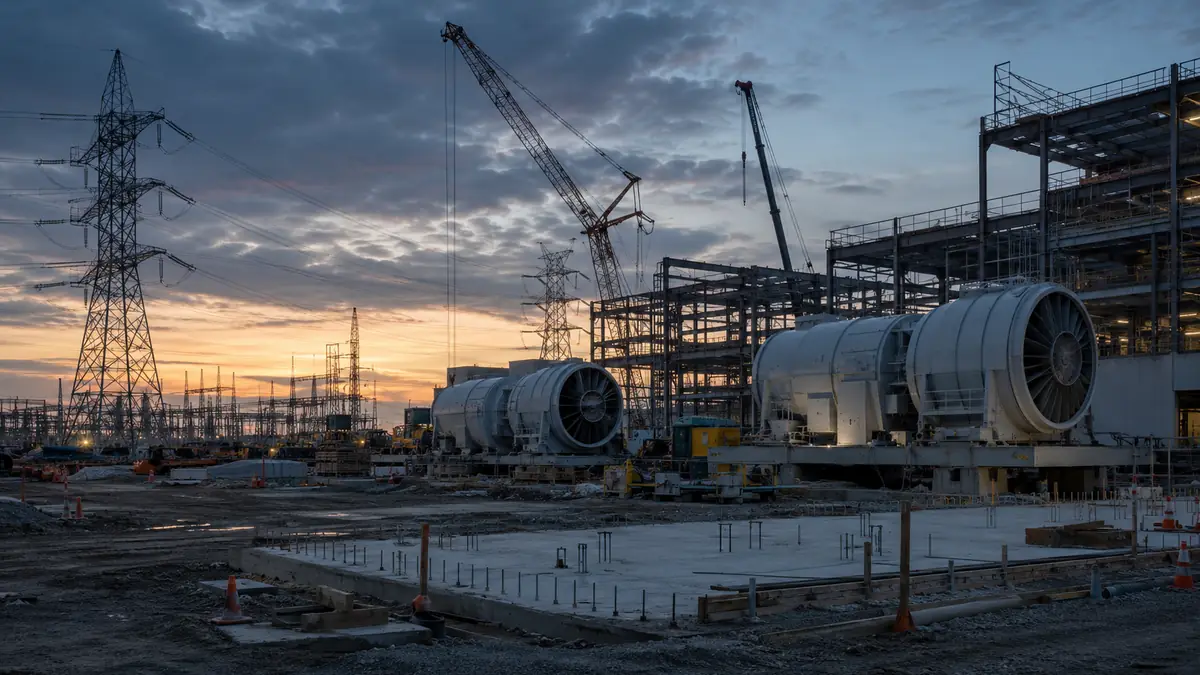
NEW YORK, September 1, 2026. GE Vernova's gas turbine backlog hit 116 gigawatts at the end of the second quarter of 2026. That's up from 100 GW three months earlier. It was 83 GW at the close of 2025. New orders are booking for 2031 delivery. Siemens Energy's backlog stood at 69 GW at its fiscal third-quarter close in June. Lead times there run three years or more. A combined-cycle gas plant that took 3.5 years to build in 2023 now takes roughly five. The largest heavy-duty frames take up to seven.
The grid itself is no faster. Lawrence Berkeley National Laboratory's latest "Queued Up" survey tracked projects that reached commercial operation in 2024. The median wait in interconnection queues was 55 months, or about 4.5 years. That's up from three years in 2015 and under two in 2008. By the end of 2025, roughly 2,060 GW of proposed capacity sat in queues nationally. Installed capacity nationwide is just 1,279 GW. For a developer with a lease and a chip order already in hand, that queue is the longer pole in the tent now. Raising the money was the easy part.
Sponsors have started designing around the wait instead of sitting through it. Blue Owl Capital closed $27B in financing for Meta's Hyperion data center campus in Richland Parish, Louisiana, in October 2025. It's the largest private-credit data center deal on record. Blue Owl funds roughly 80% of it; Meta holds a 20% joint-venture stake. Entergy Louisiana is building 3 GW of new generation to serve that load by 2028. Three of the new plants run on gas. Brookfield and NextEra announced a Paducah, Kentucky data center campus in July 2026, valued at more than $100B. It came paired from the start with a dedicated 2 GW gas plant and up to 2.6 GW of battery storage.
Nuclear restarts follow the same logic. Constellation's Crane Clean Energy Center, the former Three Mile Island Unit 1, is being revived under a 20-year power purchase agreement with Microsoft for 835 megawatts. The roughly $1.6B restart is backed by a $1B Department of Energy loan approved in November 2025. The plant now targets a 2027 return to service, ahead of its original 2028 schedule. In each of these deals, the sponsor or its counterparty is putting capital straight into generation assets. Nobody is waiting for a utility to solve it on a normal timeline.
Private equity's data center investment reached $45.7B in 2025, a five-year high. Some forecasts put PE-linked data center financing at $350B by 2028. Treat that figure as a projection; it isn't a confirmed number. What's harder to project is how much of that money funds turbines and transmission lines instead of chips and racks. Turbine lead times stretching to 2031 have already made that call for sponsors. So have queues averaging 4.5 years. The ones willing to build or bankroll their own power plants can deliver a data center on schedule. Everyone else is waiting in line.